
MOF unlawfully funds NDC in billions of Afghanis

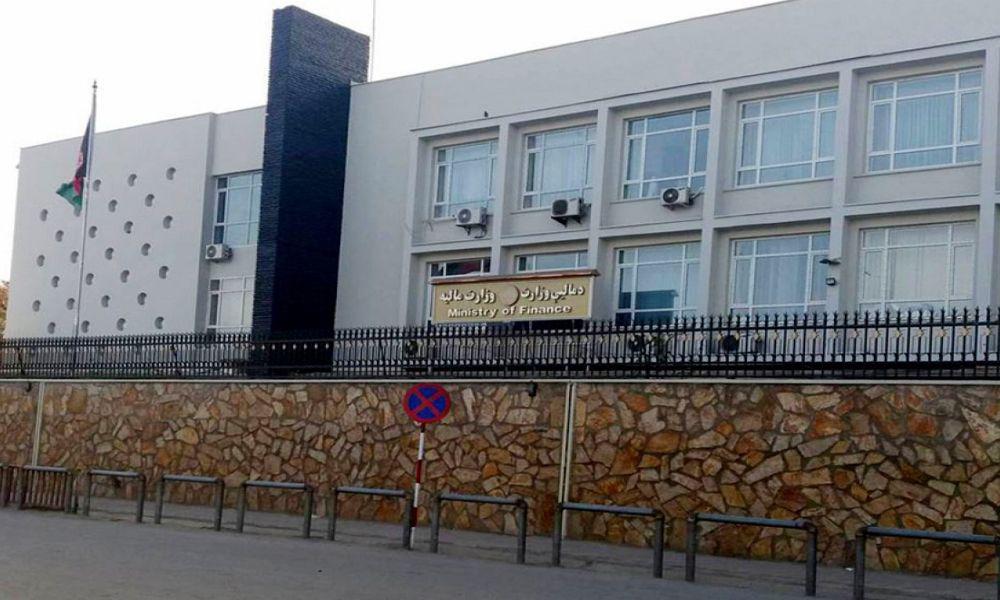
According to the House of Representatives, the National Development Company (NDC) has legal problems and therefore, the Ministry of Finance shouldn’t have funded it.
Members of the Finance and Budget Commission of the House of Representatives say the MOF has illegally paid billions of Afghanis to the NDC to implement projects.
They emphasize that they will not pass budgets and expenditures that are against the law.
They call the creation and operation of the National Development Company illegal, while the company has started a number of projects worth billions of Afghanis.
They say most projects are run by the company through a single source, which is against the law.
According to a number of members of parliament, the money paid to the company by the MOF is not included in the national budget document.
Ahmad Javid Sapai, a member of the Finance and Budget Committee of the House of Representatives, said, “We witnessed that the MOF granted projects to the NDC from a single source which is an illegal act. In some cases, the projects should be given from a single source where every detail is taken into account.”
The finance ministry called the criticism of the parliament’s finance and budget commission baseless, saying the ministry’s actions were based on a presidential verdict.
The spokesman of MOF said there was no evidence of corruption in the projects.
“We have never done anything in the budget that is against the law. All our activities are in accordance with the law and we will continue to do so,” said Shamrooz Khan Masjidi, MOF spokesperson.
Experts have also expressed concerns over the matter and called on the government to address the legal issues of the National Development Company.

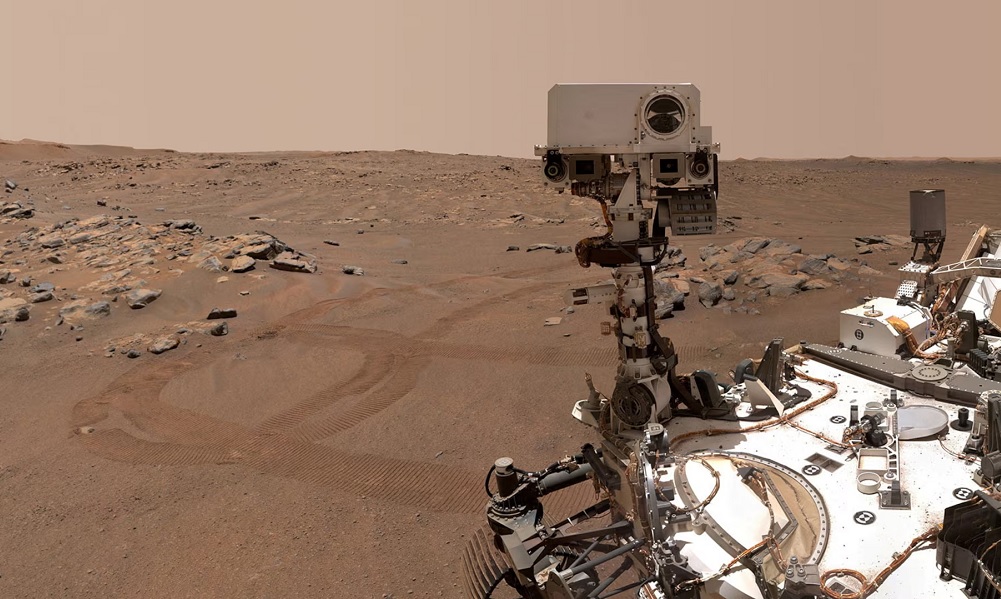
NASA’s robotic Perseverance rover has now driven farther than any other vehicle on the surface of any world other than Earth, racking up 28.1 miles (45.2 km) since arriving on Mars in 2021, the US space agency said on Tuesday.
The car-sized, six-wheeled rover reached the milestone 5-1/2 years into its mission to explore if conditions conducive to microbial life ever existed on Earth’s neighbor, Reuters reported.
In doing so, it is visiting some of the most ancient terrain ever encountered in the solar system.
“Perseverance’s engineering hardware and instruments are in excellent shape with all redundant systems still available,” Steven Lee of NASA’s Jet Propulsion Laboratory in California, told Reuters.
“A recent assessment of all systems concluded that they are capable of operating well into the 2030s, likely beyond,” added Lee, the project manager for NASA’s two Mars rovers, Perseverance and Curiosity.
Perseverance has exceeded the previous figure of 28.06 miles (45 km) driven on the Martian surface by NASA’s Opportunity rover from 2004 to 2018. Both also exceeded the driving distances of any lunar rover.
TRAVERSING JEZERO CRATER
Perseverance, with its suite of scientific instruments, has focused on the Jezero Crater, a region in the northern hemisphere of Mars believed to have been flooded with water and home to a lake basin billions of years ago.
The rover set the milestone in a journey toward an area called Idubi, through the region off the crater’s western rim nicknamed Lac de Charmes.
Its companion rover, Curiosity, rolls along in the Gale Crater near the Martian equator.
Perseverance is showing no signs of slowing down, Lee added.
Its mobility system mechanisms are being tested to show it can drive 100 km (62 miles) or more, he said, with the hardware to be tested to the equivalent of 150 km to 300 km (93 miles to 186 miles) in the effort.
NASA attributed a major role in Perseverance’s success to its self-driving capability, an autonomous navigation system called AutoNav. Lee said 90% of its drives are done autonomously, with no human intervention.
“Perseverance takes stereo images of the terrain ahead, generates a 3D software map, and selects the safest path towards a drive goal,” he said.
Another key component is the Vision Compute Element, a fast co-processor computer that allows the rover to process images and run its self-driving software very quickly, almost continuously during drives, Lee added.
That contrasts with previous rovers, which needed to pause to “think” before each drive segment, he said.
“Perseverance builds on the 29-year legacy of our past Mars rovers — Sojourner, Spirit, Opportunity and Curiosity — each incorporating prior lessons and improving our ability to drive on another world,” Lee said.
POTENTIAL BIOSIGNATURE
Lee said the rover’s biggest achievement was almost certainly its discovery, unveiled last year, of a potential biosignature, or possible sign of ancient microbial life.
This was found in reddish rock believed to have formed 3.2 billion to 3.8 billion years ago in a river channel feeding the lake that once filled Jezero Crater.
The Lac de Charmes terrain, Lee said, may yield clues to early planetary geological processes, such as the effects of large meteorite impacts. Jezero Crater was formed by such an impact early in Martian history.
Lee cited orbital evidence that some areas of the rim were once hydrothermal systems with warm or hot groundwater.
“These areas may once have provided a warm, watery subsurface environment conducive to life,” he added. “Indeed, some paleontologists hypothesize that life on Earth began in such environments.”
The rover’s original mission envisaged just 12.4 miles (20 km) of driving. NASA recently approved an extension of its mission to explore the crater rim until roughly the end of 2028.
The rover’s plutonium-based power system is performing as expected, Lee said, adding it has “many years of useful energy still available.”

Russia has warned that the return of US military infrastructure to Afghanistan would pose a direct threat to all countries in the region, as Moscow continues to strengthen security and economic cooperation with Kabul.
Alexander Venediktov, deputy secretary of Russia’s Security Council, said the United States had made no secret of its plans to restore military infrastructure in Afghanistan.
“The emergence of such a foothold would pose a direct threat to all countries in the region,” Venediktov said, according to a statement from the Russian Security Council’s press service.
He said Russia’s security dialogue with Kabul also aimed to prevent the return of military infrastructure belonging to countries outside the region.
Venediktov described cooperation with Afghanistan as multifaceted and in line with Russia’s national interests, both in terms of security and efforts to establish a peaceful and stable Eurasian region.
He added that Russia was not alone in engaging with Afghanistan’s current leadership, noting that almost all countries in the region maintained direct contacts with Kabul.
Venediktov also said the Shanghai Cooperation Organisation (SCO) was discussing the restoration of cooperation with Afghanistan through a previously established contact group.
According to the Russian official, Moscow-Kabul relations were developing across several channels, including foreign ministries, government institutions and business communities.
He said the two sides had also established a bilateral working group on trade and economic cooperation, while efforts were underway to strengthen the legal framework governing their relations.
Venediktov added that economic cooperation with Kabul was important for advancing regional transport and energy projects.


NASA’s Perseverance rover breaks record for off-planet driving on Mars

Russia warns against return of US military infrastructure to Afghanistan

Tahawol: Kabul’s criticism of Islamabad’s policy toward Afghanistan

Saar: Pakistan deploying army in KP

Afghanistan face daunting 479-run chase against Bangladesh in Abu Dhabi Test

EU and FAO launch €5m programme to strengthen Afghanistan’s agrifood sector

Cricket Bonanza: Afghanistan set for packed international schedule

New warnings reignite debate over AI threat to humanity

UN warns of mounting humanitarian and human rights pressures in Afghanistan

Afghanistan faces cancer treatment crisis
Tahawol: Kabul’s criticism of Islamabad’s policy toward Afghanistan
Saar: Pakistan deploying army in KP

Tahawol: EU appointing new envoy for Afghanistan

Saar: Pakistan’s political, security and economic crises

Saar: Ongoing expulsion of Afghan refugees from Iran and Pakistan discussed
-

 Regional4 days ago
Trump says US will not attack Iran before midterm elections in November
-
 Latest News3 days ago
Pakistan issues new directives for Afghan medical students and doctors
-
 Business5 days ago
Russia-Afghanistan trade surges 150% in first seven months of 2026
-

 World4 days ago
Witkoff, Kushner to meet Ukrainians for talks on the war, says US source
-

 Sport5 days ago
Arman FC defeat Istiqlal Kabul 3-2 in thrilling comeback
-

 Latest News3 days ago
Iranian lawmaker praises Afghanistan’s support, accuses Pakistan of ‘hypocrisy’
-
 Regional5 days ago
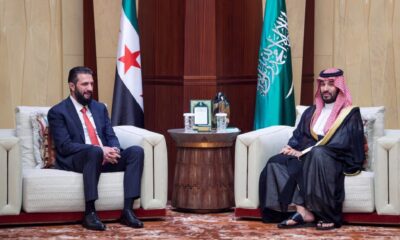
Syria weighs military aid for Saudi Arabia amid Yemen war: Reuters
-

 Business5 days ago
Afghan products attract Saudi buyers at major food expo in Jeddah