
Latest News
Tajikistan reduces power supply to Afghanistan from 350 to 40MW

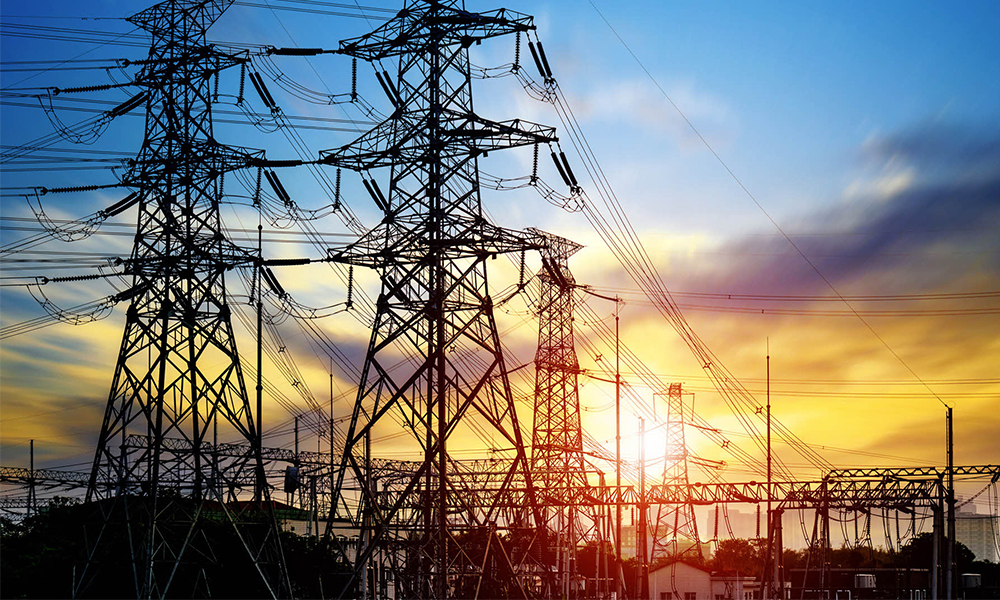
Da Afghanistan Breshna Sherkat (DABS), the country’s national power company, announced Monday that imported electricity from Tajikistan to Afghanistan has been reduced from 350 megawatts to 40 megawatts effective Tuesday.
In a statement released on Monday, DABS said the power has been reduced due to water shortages in Tajikistan.
However, DABS stated that an alternative had been found and that an additional 200 megawatts from Uzbekistan is being imported for Kabul and other provinces. DABS also said it was hoping to secure a further 200 megawatts as soon as possible.
“We faced the issue at 7am on Sunday, the electricity company was able to talk to Uzbekistan, and now we have provided 200 megawatts of electricity from Uzbekistan to Kabul,” Wahidullah Tawhidi, a spokesman for DABS said.
“Considering the domestic electricity, we have a total of 300 megawatts of electricity. We’re trying to get another 200 megawatts of electricity as soon as possible. The power in Kabul is relatively good right now,” he said.
According to DABS, electricity imported from Tajikistan serves Kabul, Nangarhar, Laghman, Logar, Pakita, Khost, Parwan, Panjshir, Kapisa, Baghlan, and parts of Kunduz provinces.
Meanwhile, economists say that more needs to be done to boost the domestic energy sector, especially regarding renewable energy and the production of energy from natural resources such as natural gas.
In November 2019, Bayat Power made history for Afghanistan when it successfully implemented the nation’s first 40-megawatt gas-powered Independent Power Producer (IPP) in over four decades using natural gas.
According to experts, Afghan Gas requires a lot of attention from the Afghan government in order to optimize its operations so as to sufficiently supply fuel for the 40MW power plant which is the only one of its kind in operation currently.
“If investments had been done on the electricity sector over the last decade, we would have become an exporter of electricity by now. I wish investors would successfully implement projects in the energy sector, similar to what Bayat Power did in Jawzjan and other provinces, lighting up thousands of homes,” an Afghan economist Hakimullah Sediqqi said.
“The government should think about this. In the long run, we should see the opening of dams, the opening of solar power, and have plentiful natural gas reserves worth billions of dollars. We should be able to use these resources to solve our problems of poverty and unemployment,” said Salim Toofan, an economic expert.
DABS meanwhile agreed that Afghanistan does have the means to produce power for the country.
“There is the capacity of using solar, gas, and water energy to generate electricity in Afghanistan,” said Tawhidi.
“Currently, the solar system in Kandahar province generates 40 megawatts, and the hydroelectric power dam of Helmand also generates 100 megawatts of electrical power,” he said.
However, noting private investors’ achievements in this sector, he said: “Bayat and Ghazanfar Groups have invested in power production utilizing natural gas in the northern part of the country, of which Bayat group’s electricity supply project is operational.”
He said: “There are opportunities for the private sector to invest in energy supply, and the government is ready to cooperate with them.”
The use of natural gas in energy production, specifically by Bayat Power – the first natural gas power plant in Afghanistan – has the potential to boost domestic energy production to 200MW as planned, provided Afghan Gas can deliver the much-needed fuel to operate the state of the art SGT-A45 Siemen’s turbines, which are the first to be deployed worldwide, in Afghanistan.

Latest News
UNHCR chief calls for greater support for Afghan returnees, urges protection of girls’ rights
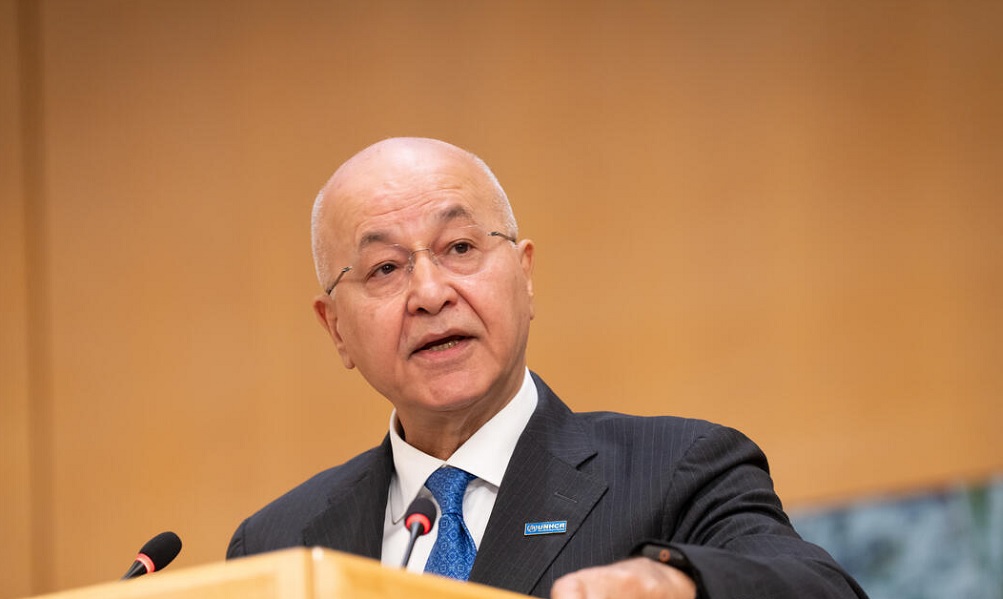
The United Nations High Commissioner for Refugees has called for greater international investment to support the reintegration of Afghan returnees, warning that millions are returning under difficult circumstances while communities face poverty, limited services and restrictions on women and girls.
Speaking at the 77th session of UNHCR’s Executive Committee, the High Commissioner said nearly seven million people had returned to Afghanistan from neighboring countries since late 2023, often under difficult conditions and not always voluntarily.
He said UN agencies and other partners, including the UN Refugee Agency and the United Nations Development Programme, were supporting reintegration efforts, but stressed that the scale of the challenges required significantly greater international assistance.
The High Commissioner also highlighted the restrictions imposed on Afghan women and girls, sharing the words of a young Afghan girl he met in Kabul earlier this year.
The girl had written a poem for another Afghan girl about education, courage and hope, emphasizing that personal ability and worth were greater than any limitation.
“Never forget you’re not alone. Your voice matters and your dreams are valuable,” the girl wrote.
The High Commissioner said the young girl’s words had stayed with him, adding that Afghan girls should not have to be exceptional to enjoy what should be an ordinary future, including access to education, the freedom to make their own choices and the opportunity to become who they want to be.
He said Afghan girls and millions of others like them were not asking the international community to dream on their behalf, but to give them opportunities to fulfil their own aspirations.
He urged world leaders to ensure their commitments were reflected in concrete decisions and actions, saying the ability to make a difference was in their hands.
“History will remember how we choose to use it,” he said.
Latest News
Muttaqi tells EU envoy global community has failed to support alternative livelihoods for farmers
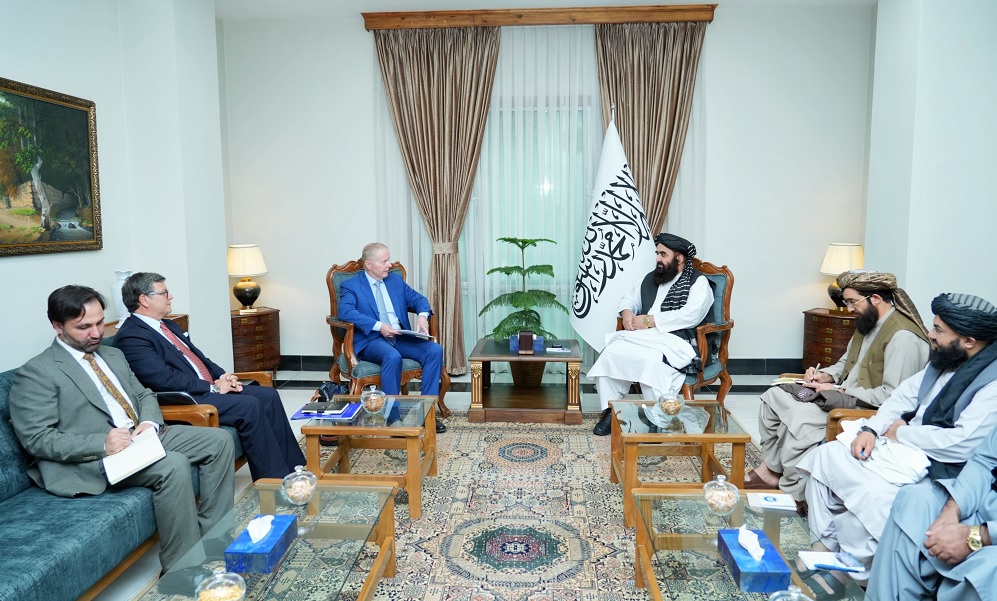
Amir Khan Muttaqi, foreign minister of the Islamic Emirate of Afghanistan (IEA), says the international community has failed to provide Afghan farmers with the necessary support for alternative livelihoods to sustain the country’s achievements in combating narcotics.
Afghanistan’s Ministry of Foreign Affairs said the issue was raised during Muttaqi’s meeting with Thomas Frellesen, the newly appointed European Union special envoy for Afghanistan.
According to a statement from the ministry, the two sides exchanged views on Afghanistan’s security situation, counter-narcotics efforts, and a range of humanitarian and political issues.
Frellesen acknowledged the IEA’s achievements in ensuring security and combating narcotics, saying that supporting security in Afghanistan and fighting drugs were part of the European Union’s official position.
He also assured Muttaqi that the EU would seek to expand cooperation with Afghanistan across various sectors.
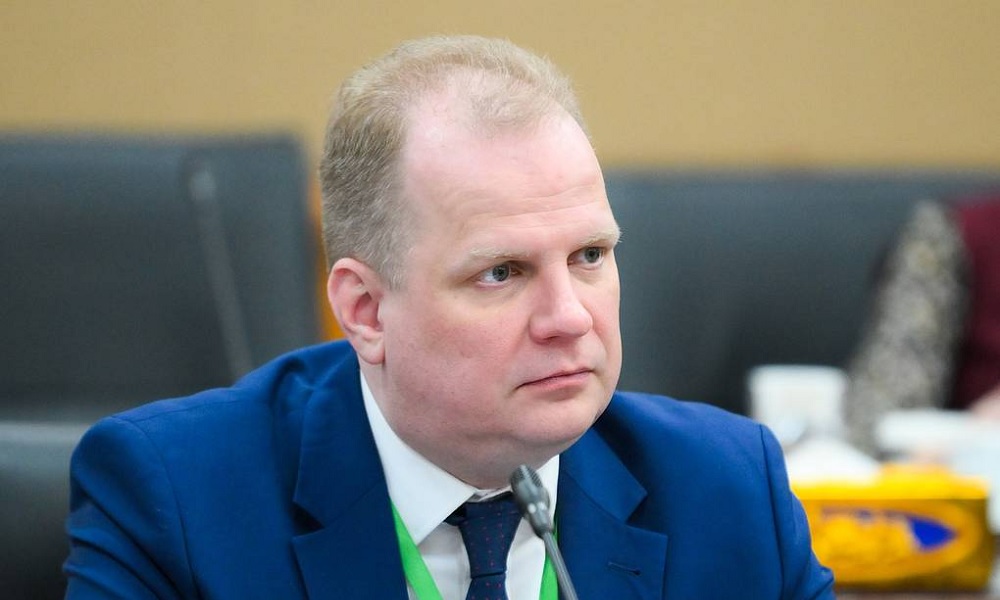
Russia has warned that the return of US military infrastructure to Afghanistan would pose a direct threat to all countries in the region, as Moscow continues to strengthen security and economic cooperation with Kabul.
Alexander Venediktov, deputy secretary of Russia’s Security Council, said the United States had made no secret of its plans to restore military infrastructure in Afghanistan.
“The emergence of such a foothold would pose a direct threat to all countries in the region,” Venediktov said, according to a statement from the Russian Security Council’s press service.
He said Russia’s security dialogue with Kabul also aimed to prevent the return of military infrastructure belonging to countries outside the region.
Venediktov described cooperation with Afghanistan as multifaceted and in line with Russia’s national interests, both in terms of security and efforts to establish a peaceful and stable Eurasian region.
He added that Russia was not alone in engaging with Afghanistan’s current leadership, noting that almost all countries in the region maintained direct contacts with Kabul.
Venediktov also said the Shanghai Cooperation Organisation (SCO) was discussing the restoration of cooperation with Afghanistan through a previously established contact group.
According to the Russian official, Moscow-Kabul relations were developing across several channels, including foreign ministries, government institutions and business communities.
He said the two sides had also established a bilateral working group on trade and economic cooperation, while efforts were underway to strengthen the legal framework governing their relations.
Venediktov added that economic cooperation with Kabul was important for advancing regional transport and energy projects.


UNHCR chief calls for greater support for Afghan returnees, urges protection of girls’ rights

Muttaqi tells EU envoy global community has failed to support alternative livelihoods for farmers

Hairatan railway port sees over 280 wagon arrivals daily from Central Asia

NASA’s Perseverance rover breaks record for off-planet driving on Mars

Russia warns against return of US military infrastructure to Afghanistan

Cricket Bonanza: Afghanistan set for packed international schedule

New warnings reignite debate over AI threat to humanity

UN warns of mounting humanitarian and human rights pressures in Afghanistan

Afghanistan faces cancer treatment crisis

Afghanistan says 28 killed, 32 captured in Nuristan operation

Tahawol: Kabul’s criticism of Islamabad’s policy toward Afghanistan

Saar: Pakistan deploying army in KP

Tahawol: EU appointing new envoy for Afghanistan

Saar: Pakistan’s political, security and economic crises

Saar: Ongoing expulsion of Afghan refugees from Iran and Pakistan discussed
-

 Regional4 days ago
Trump says US will not attack Iran before midterm elections in November
-
 Latest News3 days ago
Pakistan issues new directives for Afghan medical students and doctors
-
 Business5 days ago
Russia-Afghanistan trade surges 150% in first seven months of 2026
-
 World4 days ago
Witkoff, Kushner to meet Ukrainians for talks on the war, says US source
-

 Sport5 days ago
Arman FC defeat Istiqlal Kabul 3-2 in thrilling comeback
-
 Latest News3 days ago
Iranian lawmaker praises Afghanistan’s support, accuses Pakistan of ‘hypocrisy’
-
 Business5 days ago
Afghan products attract Saudi buyers at major food expo in Jeddah
-
 Latest News4 days ago
US senator cites Afghanistan visits in Pentagon ‘cover-up’ allegations over Iran war