
International Sports
World Cup 2026: Ten attacking stars set to steal the show in North America

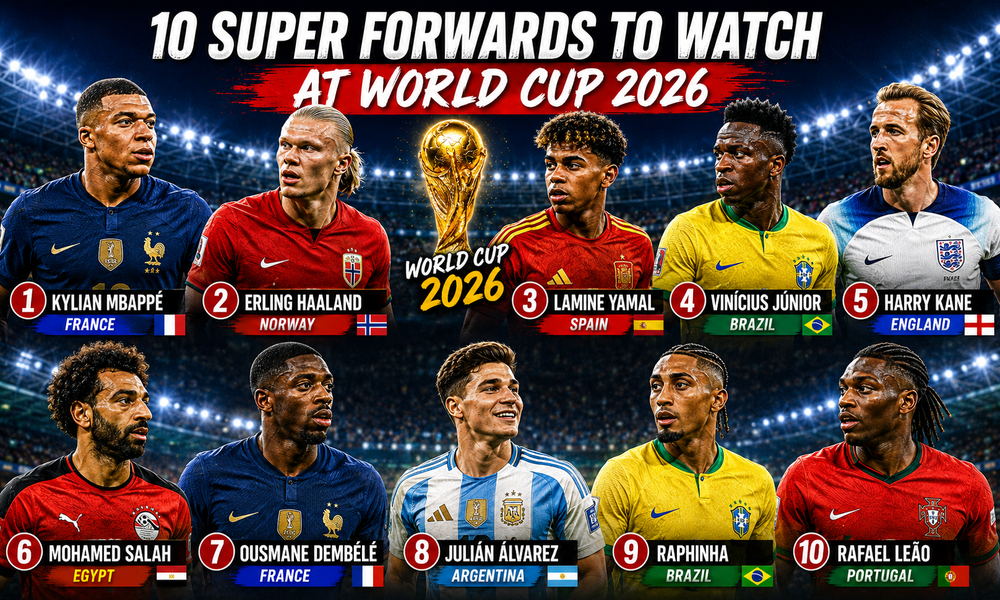
The FIFA World Cup has long been a stage where elite forwards become household names, producing the goals and moments that define football’s biggest spectacle.
With the 2026 tournament in the United States, Canada and Mexico expected to showcase some of the game’s brightest talents, these are 10 attacking players who could leave a lasting mark on the competition.
Kylian Mbappé (France)
Already a World Cup winner and Golden Boot recipient, Mbappé arrives in North America at the peak of his career. The French captain remains one of football’s most feared attackers and will once again be central to his country’s title ambitions.
Erling Haaland (Norway)
Norway’s return to the World Cup spotlight owes much to Haaland’s remarkable goalscoring form. The powerful striker combines physical strength with clinical finishing and will be among the favourites to challenge for the Golden Boot.
Lamine Yamal (Spain)
Still a teenager, Yamal has already established himself as one of football’s most exciting talents. The Barcelona star’s creativity, flair and maturity make him a potential breakout star of the tournament.
Vinícius Júnior (Brazil)
Brazil’s hopes of lifting a sixth World Cup could rest heavily on Vinícius. The Real Madrid winger continues to terrorise defenders with his pace, skill and growing goalscoring threat.
Harry Kane (England)
England’s all-time leading scorer heads into the tournament after another prolific campaign. Kane remains one of the world’s most complete forwards and a leading contender for both individual and team honours.
Mohamed Salah (Egypt)
After helping Egypt qualify, Salah finally gets another chance to shine on football’s biggest stage. Despite entering his thirties, the Liverpool legend remains one of the game’s most productive and influential attackers.
Ousmane Dembélé (France)
Having overcome years of injury setbacks, Dembélé arrives in top form following a hugely successful spell with Paris Saint-Germain. His pace, creativity and improved finishing add another dimension to France’s formidable attack.
Julián Álvarez (Argentina)
Already a World Cup winner, Álvarez continues to thrive on the biggest occasions. His work rate, intelligent movement and eye for goal make him a vital figure for the defending champions.
Raphinha (Brazil)
Raphinha has become a key component of Brazil’s attack, combining creativity with a consistent goal threat. If fully fit, he could play a major role in Brazil’s quest for glory.
Rafael Leão (Portugal)
Few players can change a game as quickly as Leão. The AC Milan winger’s explosive pace and dribbling ability make him one of Portugal’s most dangerous attacking weapons heading into the tournament.
As the countdown to World Cup 2026 continues, these forwards are expected to be among the headline acts, with their goals and creativity potentially shaping the destiny of football’s most coveted prize.



International Sports
World Cup 2026 ends in glory for Spain after month of football magic
The 2026 tournament, jointly hosted by the United States, Canada and Mexico, will be remembered as one of the most entertaining World Cups in history.
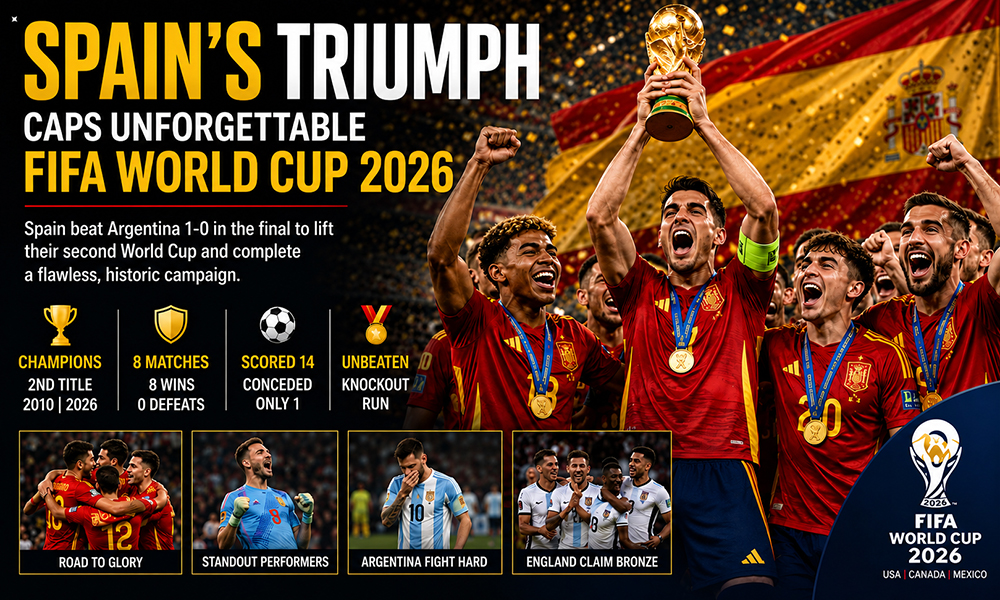
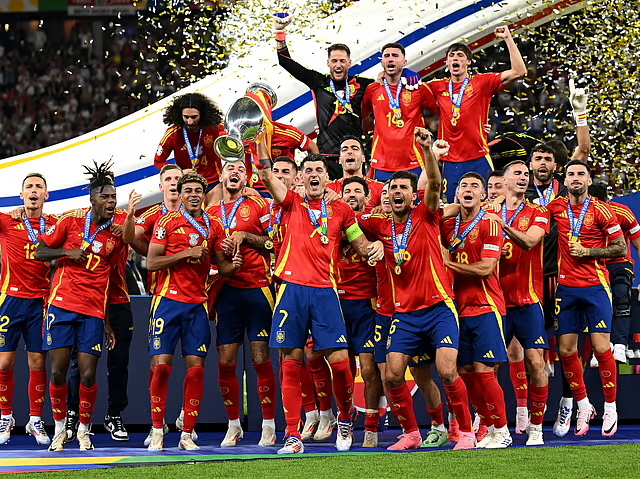
Spain were crowned FIFA World Cup 2026 champions after edging Argentina 1-0 in a tense final, capping a flawless campaign that reaffirmed La Roja’s place among world football’s elite.
The Spaniards lifted the trophy for the second time in their history, adding to their 2010 triumph, after winning every knockout match without the need for extra time or penalties. Their disciplined defence, composed midfield and clinical finishing proved too much for every opponent they faced on the road to glory.
Spain’s journey through the knockout rounds was one of consistency and control. They opened with a convincing 3-0 victory over Austria before defeating neighbours Portugal 1-0 in a hard-fought Round of 16 clash. A thrilling 2-1 win over Belgium in the quarter-finals was followed by an impressive 2-0 victory over France in the semi-finals, setting up the championship showdown with Argentina.
In the final, Spain produced another composed performance, securing a narrow 1-0 victory to deny Lionel Messi and Argentina back-to-back World Cup titles. The triumph also completed an unbeaten tournament for Spain and confirmed them as worthy champions.
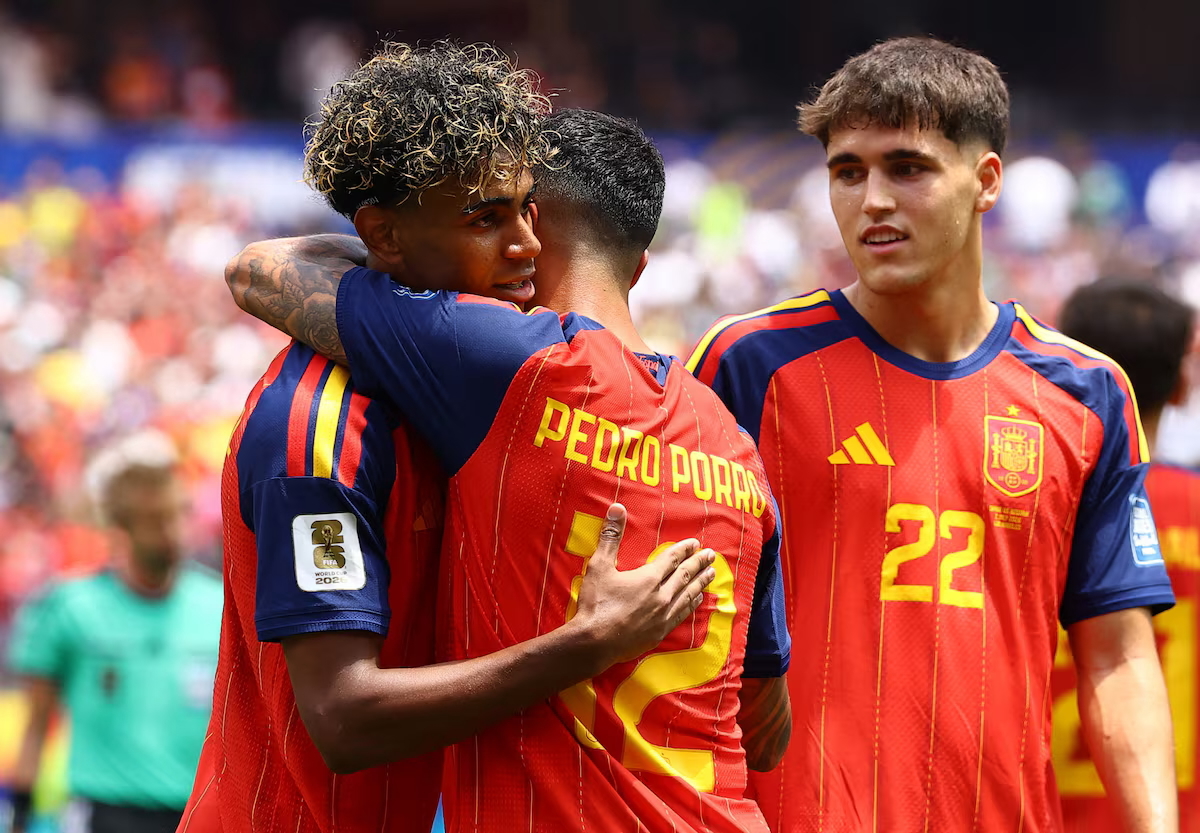
The 2026 tournament, jointly hosted by the United States, Canada and Mexico, will be remembered as one of the most entertaining World Cups in history. It was the first edition featuring 48 teams, delivering more matches, more goals and countless memorable moments.
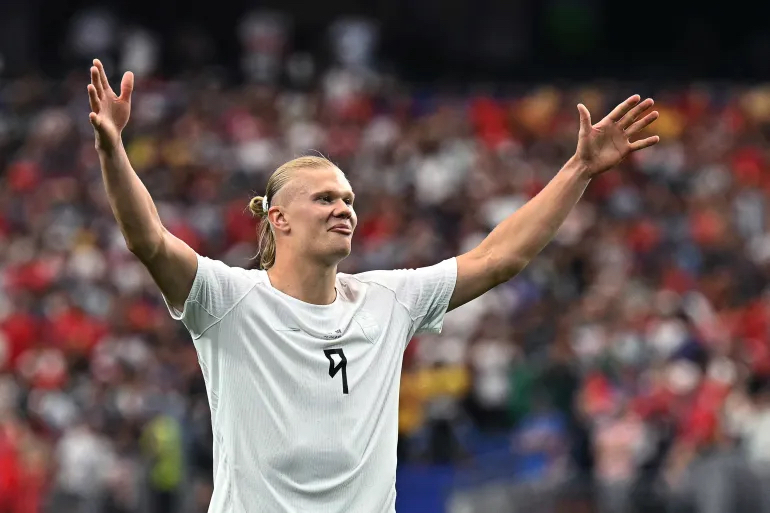
One of the biggest surprises came from Norway, who reached the quarter-finals after eliminating five-time champions Brazil in the Round of 16. Morocco continued to prove their growing stature on the world stage by reaching the quarter-finals after knocking out Canada before eventually losing to France.
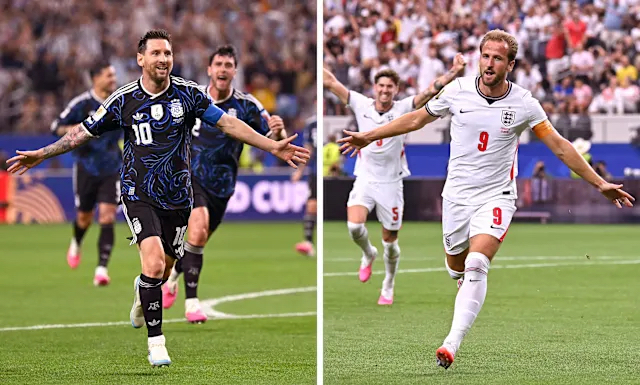
England enjoyed their best World Cup performance since winning the tournament in 1966. The Three Lions defeated Mexico, Norway and reached the semi-finals before losing to Argentina. They then produced one of the most entertaining matches of the tournament, defeating France 6-4 in an extraordinary third-place playoff to claim the bronze medals.
Argentina once again demonstrated why they remain among football’s global powers. After dramatic victories over Cape Verde, Egypt, Switzerland and England, they reached a second consecutive World Cup final but fell just short against a disciplined Spanish side.
The competition also showcased football’s global growth. New nations made their mark, several traditional powers exited earlier than expected, and supporters witnessed dramatic penalty shootouts, late winners and remarkable comebacks throughout the month-long spectacle.
Individual brilliance also lit up the tournament. Argentina captain Lionel Messi once again inspired his country deep into the competition, while Spain’s young generation announced themselves on the biggest stage with mature performances under pressure. Several emerging stars used the World Cup to establish themselves among football’s elite, suggesting the future of the sport is in safe hands.
The expanded 48-team format was widely regarded as a success, giving more nations the opportunity to compete while maintaining the quality and excitement of the knockout stages. Packed stadiums across North America and a global television audience of well over one billion ensured the tournament became another landmark event for world football.
As Spain celebrate a deserved world title, attention now turns toward the next four-year cycle. For many veterans, including several iconic stars, the tournament marked the end of remarkable international careers, while a new generation leaves North America ready to shape the future of the FIFA World Cup.
For football fans across Afghanistan, Ariana Radio and Television Network’s (ATN) exclusive live coverage brought every unforgettable moment into homes across the country, from the opening match to Spain’s historic triumph, concluding another memorable chapter in World Cup history.
International Sports
Spain sweep FIFA World Cup player awards after historic triumph
France captain Kylian Mbappé won the Golden Boot after finishing as the tournament’s leading scorer with 10 goals. The award marked the second time Mbappé has claimed the World Cup’s top scorer prize, further cementing his status as one of the game’s leading forwards.
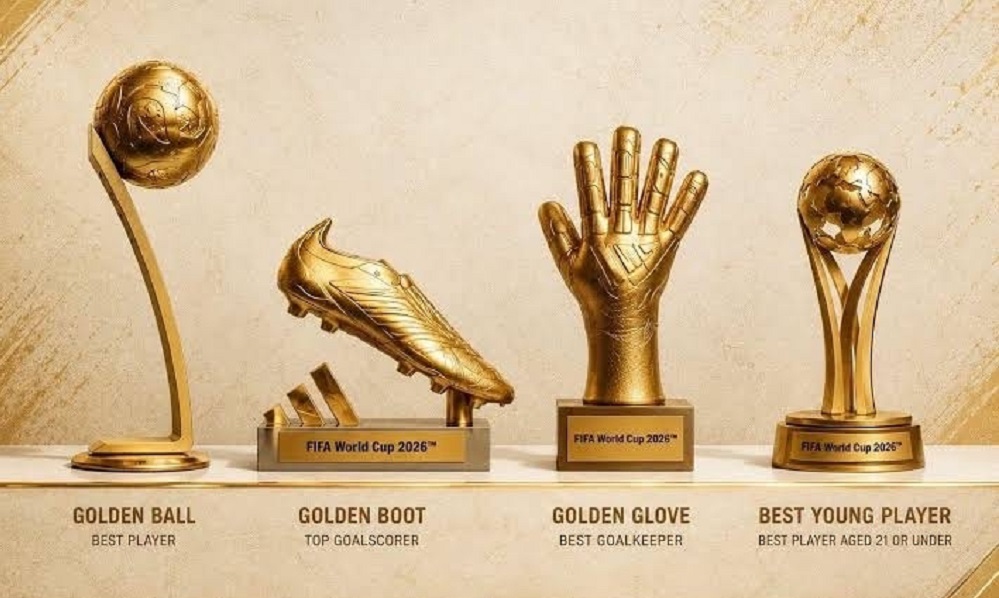
Newly crowned FIFA World Cup champions Spain capped off a remarkable tournament by collecting four of the competition’s five major individual awards following their 1-0 victory over Argentina in Sunday’s final.
Spain midfielder Rodri was named the winner of the Golden Ball as the tournament’s best player after leading his side to a second World Cup title. The experienced midfielder produced a series of commanding performances throughout the tournament, controlling matches with his vision, passing and leadership.
France captain Kylian Mbappé won the Golden Boot after finishing as the tournament’s leading scorer with 10 goals. The award marked the second time Mbappé has claimed the World Cup’s top scorer prize, further cementing his status as one of the game’s leading forwards.
Spain goalkeeper Unai Simón received the Golden Glove after an outstanding tournament in which Spain conceded just one goal. His consistent performances and crucial saves played a key role in his country’s title-winning campaign.
Nineteen-year-old Spain defender Pau Cubarsí was named Best Young Player after emerging as one of the stars of the tournament. The young centre-back impressed with his composure and maturity, helping Spain record one of the best defensive records in the competition.
Spain’s dominance in the individual honours reflected the team’s outstanding performances throughout the month-long tournament, with four of the five major awards going to members of the world champions.
2026 FIFA World Cup major award winners
- Golden Ball (Best Player): Rodri (Spain)
- Golden Boot (Top Scorer): Kylian Mbappé (France) – 10 goals
- Golden Glove (Best Goalkeeper): Unai Simón (Spain)
- Best Young Player: Pau Cubarsí (Spain)
International Sports
What’s at stake? World Cup glory, millions in prize money and football immortality
For the first time, the FIFA World Cup champions will receive $50 million in prize money, the biggest payout ever awarded to the winners of the tournament.
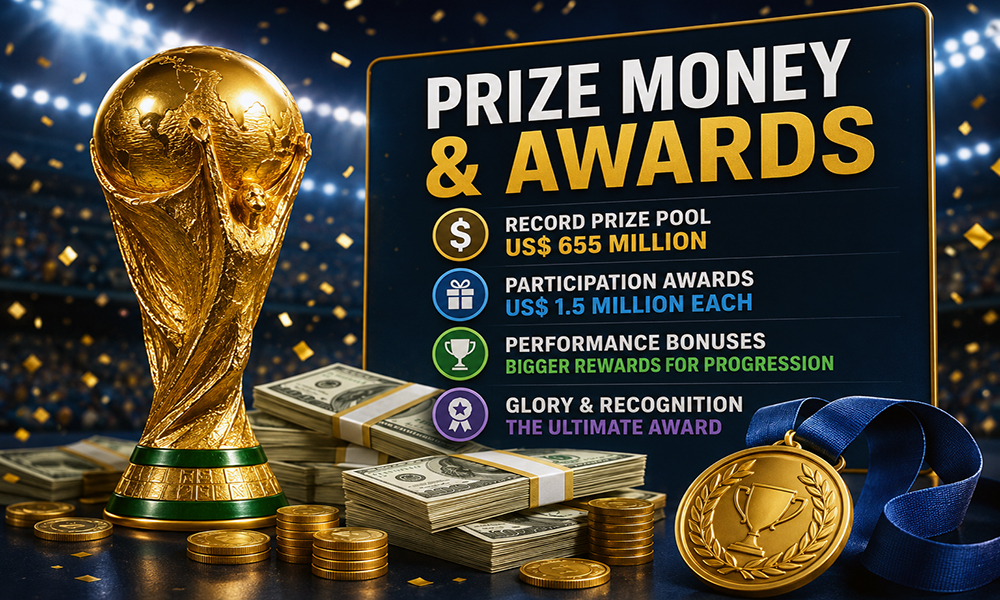
Everything is on the line as Argentina and Spain prepare to meet in the 2026 FIFA World Cup final in just a few hours, with the winners set to lift football’s most prestigious trophy, earn a record financial reward and secure their place in sporting history.
Record prize money
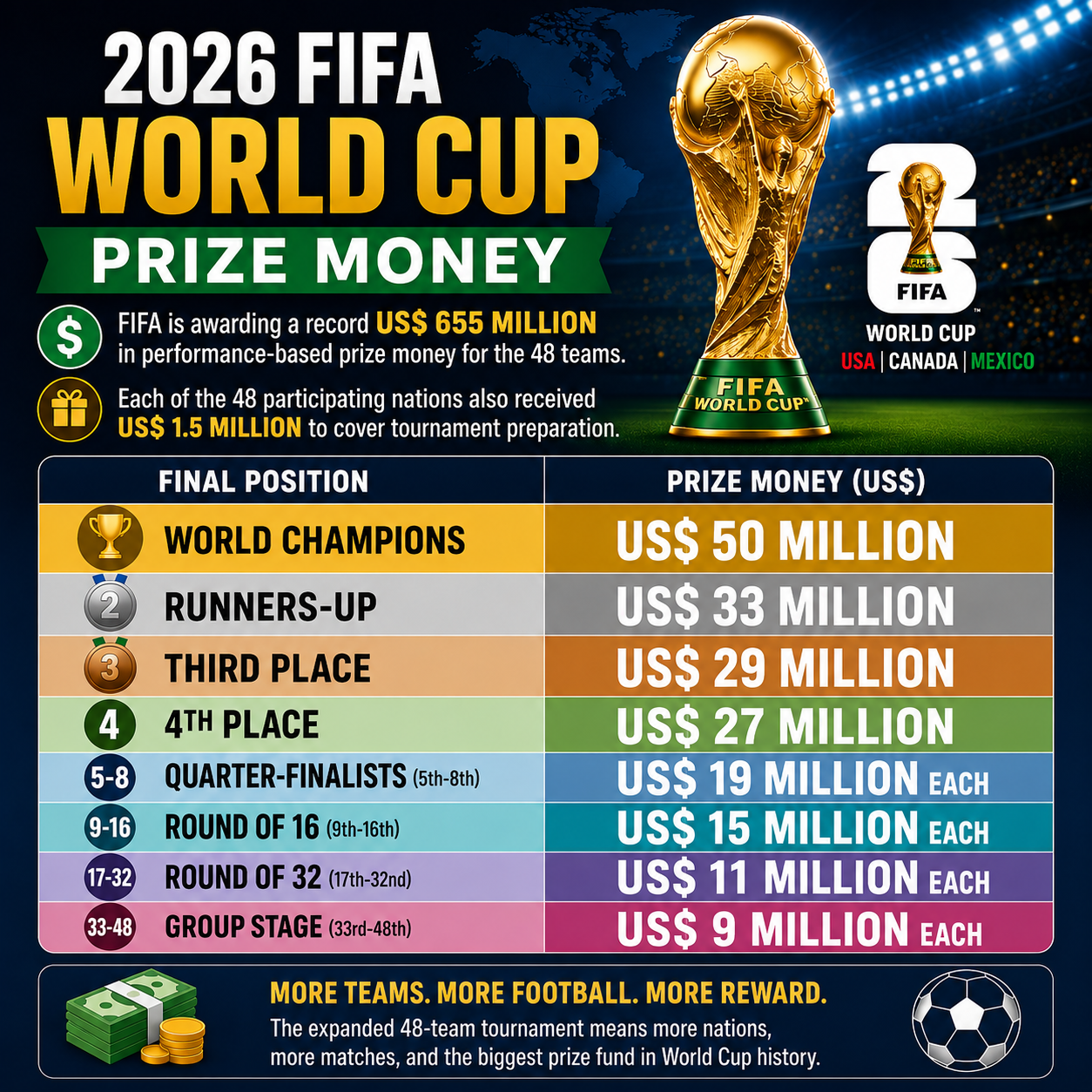
For the first time, the FIFA World Cup champions will receive $50 million in prize money, the biggest payout ever awarded to the winners of the tournament.
The runners-up will take home $33 million, meaning there is a $17 million difference between winning and losing the final.
The 2026 World Cup features a record $655 million in performance-based prize money, with every one of the 48 participating nations also receiving $1.5 million to help cover tournament preparation costs.
More than just money
While the financial rewards are significant, both teams have their sights set on lifting the iconic FIFA World Cup trophy.
Argentina is chasing a fourth World Cup title, having previously triumphed in 1978, 1986 and 2022. Victory would see Lionel Messi add another World Cup winner’s medal to an already remarkable career and cement Argentina’s status among football’s greatest nations.
Spain, meanwhile, is aiming for its second World Cup crown after winning the tournament for the first time in 2010. A victory would confirm Spain’s return to the summit of world football.
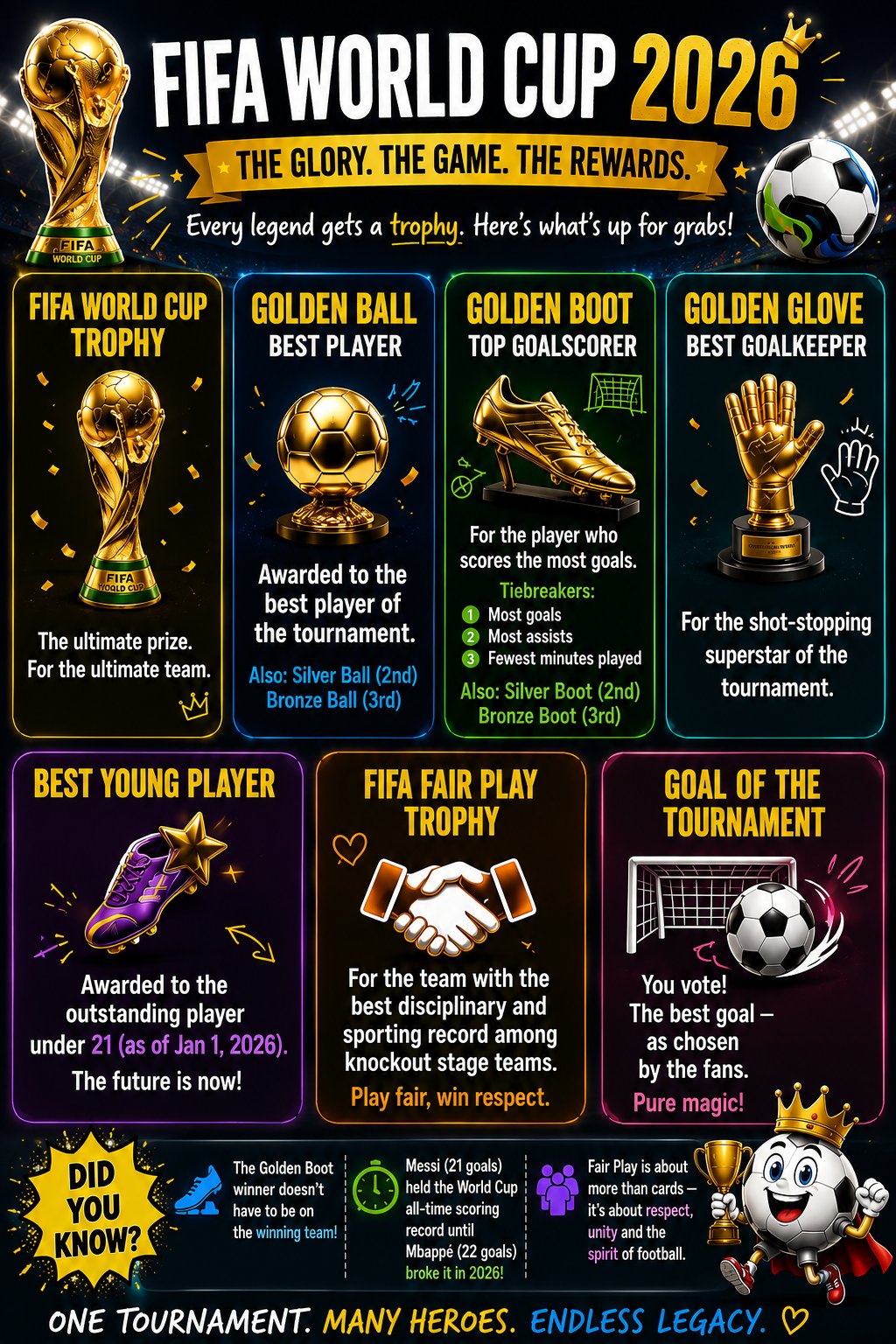
Individual honours still up for grabs
Several prestigious individual awards will also be decided after the final whistle.
Golden Boot – Awarded to the tournament’s leading goalscorer. France’s Kylian Mbappé currently leads with 10 goals, while Argentina captain Lionel Messi has eight and still has a chance to catch him in the final.
Golden Ball – Presented to the tournament’s best overall player. Messi is among the favourites, although several Spanish stars remain in contention depending on the outcome of the final.
Golden Glove – Awarded to the tournament’s outstanding goalkeeper, recognising the best performances between the posts throughout the competition.
Best Young Player Award – Presented to the standout player aged 21 or younger who has impressed during the tournament.
FIFA Fair Play Award – Awarded to the team with the best disciplinary record while demonstrating respect for opponents, referees and the spirit of the game.
A place in football history
Beyond the trophies and prize money, tonight’s winners will earn something priceless – a permanent place in football history.
For Argentina, victory would mean back-to-back World Cup triumphs and another chapter in the nation’s rich football legacy.
For Spain, it would mark a return to the top of the global game and a second world title.
When the final whistle sounds, one team will walk away with $50 million, the FIFA World Cup trophy, and the honour of being crowned the 2026 FIFA World Cup champions.
Football fans across Afghanistan won’t want to miss a moment of the action as Argentina and Spain battle for the biggest prize in world football. The 2026 FIFA World Cup final preview show starts at 10:00pm Kabul time live and exclusively on Ariana Television. The match kicks off at 11.30pm.
From the pre-match build-up and team line-ups to the trophy presentation and celebrations, viewers can catch every moment of what promises to be an unforgettable night of football. Tune in to Ariana Television and be part of the excitement as the world crowns its new champions.


Afghanistan can link South and Central Asia through data transit: Baradar

Afghanistan, Uzbekistan discuss expanding economic, trade and investment cooperation

Afghan PM, Uzbek Deputy PM hold talks on expanding economic and political cooperation

Badakhshan Governor, Army Chief reaffirm commitment to Afghanistan’s security

Afghanistan, Uzbekistan reaffirm commitment to expanding agricultural cooperation in Bamyan

India offers 1,000 online scholarships for Afghan students for 2026-27 academic year

Afghanistan eyes direct Basmati rice imports from India amid tensions with Pakistan

Cricket world pays tribute to Afghanistan fast bowler Shapoor Zadran

Turkey spent over $120 million to prepare airport for Qatar-donated U.S. presidential aircraft

Afghanistan, Uzbekistan set for friendly cricket clash in Khost

Tahawol: New developments ahead in the Middle East discussed

Saar: Rising tensions between Kabul and Islamabad discussed

Tawsia: Factors behind rising fuel prices in Afghanistan discussed

Tahawol: US-Kabul engagement on security issues discussed

Saar: Continued exchange of attacks between US-Iran discussed
-

 Latest News4 days ago
Germany defends Afghan deportation policy after fatal Trier knife attack
-
 Sport4 days ago
FIFA updates world rankings; Spain climbs to No. 1, Afghanistan ranked 171st
-

 Latest News4 days ago
Afghanistan and Uzbekistan advance railway cooperation, discuss Trans-Afghan project
-

 World4 days ago
War in Iran has cost the US $37.5 billion so far, Pentagon says
-
 Business3 days ago
Pakistan’s trade deficit with neighbours surges to nearly $16 billion as exports to Afghanistan plunge
-

 Latest News4 days ago
Amnesty International calls for probe into Pakistan airstrike on Kabul rehabilitation centre
-

 Sport4 days ago
Rahmat Shah Zurmati appointed Afghanistan’s new Test and ODI captain
-
 Latest News2 days ago
Five armed men killed while attempting to cross Durand Line into Badakhshan