
Science & Technology
GLP-1 drugs may have a beneficial effect across many types of cancer
The drugs, originally designed to treat diabetes and found to promote weight loss, have also shown benefits for heart risks, sleep apnea and alcohol and substance abuse.


A growing body of evidence suggests that popular GLP-1 drugs, widely used for weight loss and diabetes, can provide protection against many types of cancer, Reuters reported.
More than two dozen studies presented over the past few days at the American Society of Clinical Oncology meeting in Chicago found that patients taking the drugs showed lower risks of developing cancer and disease progression, better survival, and improved responses to some treatments, compared with people who were not taking the GLP-1s.
The studies included analyses of clinical records and real-world databases tracking patients taking Novo Nordisk’s (NOVOb.CO), Wegovy or Ozempic, Eli Lilly’s (LLY.N), Zepbound or Mounjaro, or older GLP-1 treatments.
The studies were not designed to show how or why GLP-1 use might affect cancer treatment. But researchers believe by reducing inflammation, regulating insulin signaling and possibly engaging directly with tumor biology, they may contribute to a protective effect in cancer patients.
“Chronic inflammation is a fundamental biological pathway involved in the development and progression of many cancers,” said Dr. Elizabeth Susan McDonald of the University of Pennsylvania.
McDonald on Tuesday reported on a study of 110,000 women, showing those who took GLP-1 medications were up to 35% less likely to develop breast cancer than those who did not.
While obesity itself is a known risk factor for certain cancers, the anti-inflammatory effects of GLP-1s will likely prove to have a role in cancer prevention, McDonald said.
GLP-1 drugs include semaglutide, the active ingredient in Wegovy, Ozempic and Rybelsus; tirzepatide, sold as Mounjaro and Zepbound, as well as Lilly’s Trulicity, or dulaglutide, and Novo’s older liraglutide, sold as Saxenda and Victoza.
Some of the strongest signals of benefit came from a study of more than 12,000 patients that showed GLP-1 use was associated with markedly lower odds of cancers advancing to metastatic disease, particularly in lung, breast, colorectal and liver cancers.
People with those cancers who took liraglutide, pramlintide, dulaglutide, tirzepatide, lixisenatide, or semaglutide were 38% to 50% less likely to see the disease spread than people who took drugs from a different class of diabetes medicines known as gliptins.
Reduced cancer incidence, longer survival, and fewer metastases were also seen with GLP-1 use in patients with endometrial, bladder and prostate cancers, as well as in those with small intestine neoplasms and blood cancers, multiple studies found.
A separate analysis of patients treated at U.S. community oncology practices found GLP-1 use was associated with significantly better overall survival across six tumor types – breast, prostate, colorectal, lung, liver and kidney – with a roughly one-third reduction in the risk of death.
Researchers also reported that cancer patients receiving immunotherapies such as Merck’s (MRK.N), Keytruda and Bristol Myers Squibb’s (BMY.N), Opdivo or Yervoy appeared to fare better when they were taking GLP-1 drugs, suggesting a possible interaction with the immune system.
GLP-1 users with type 2 diabetes and stage 3 kidney disease had substantially lower mortality and lower rates of several malignancies, particularly lung, colorectal, and hepatocellular cancers, than non-users, read the report.
While GLP-1 medications carry a warning regarding a possible association with a type of thyroid cancer based on rodent studies, researchers say the recent findings point to a potential beneficial class effect across tumor types, rather than benefits confined to a small subset of cancers.
The drugs, originally designed to treat diabetes and found to promote weight loss, have also shown benefits for heart risks, sleep apnea and alcohol and substance abuse.
“These drugs have never been just glucose-lowering agents,” Dr. Marcin Chwistek of the Fox Chase Cancer Center in Philadelphia said at an ASCO press briefing.
Researchers cautioned that nearly all of the data presented were from observational studies, raising the risk of confounding factors. Patients prescribed GLP-1 drugs may differ in important ways, including overall health, access to care and concurrent treatments, that could influence outcomes.
While the various studies tried to account for those differences, none can prove the drugs improve cancer outcomes. Experts said trials in which GLP-1s are added to standard treatment in some cancer patients but not others are needed to establish clear anti-cancer benefits. Some trials are already being planned.
The apparent cancer benefits were not clearly tied to the drugs’ weight-loss effects, suggesting that alone does not explain the findings, Reuters reported.
A seven-year study with nearly 120,000 participants found GLP-1s were associated with lower rates of new prostate cancer diagnoses in high-risk men, compared to drugs such as Merck’s Propecia and GSK’s (GSK.L), Avodart, which are used to shrink enlarged prostate glands.
GLP-1 users had a “very small” reduction in body weight at one year, said Dr. Colton Jones of the University of Texas San Antonio Mays Cancer Center who presented the study at ASCO.
“We hypothesize that both weight loss and a direct anti-cancer effect and anti-inflammatory effect may be driving the associations observed in our study,” Jones said.
ASCO expert Chwistek said anti-inflammatory and immune-modulating properties have long suggested broader effects of GLP-1s.
Referring to one of the largest studies, Chwistek said: “What’s new here is the consistency across tumor types, and data this large and this consistent warrant a prospective randomized trial.”











A veteran-led organisation has launched a new artificial intelligence-powered platform designed to help Afghans navigate complex visa and relocation options as thousands remain stranded or at risk nearly five years after the withdrawal of U.S. forces from Afghanistan.
The Visa Pathways and Relocation Information Center (V-PRIC), developed by AfghanEvac, uses artificial intelligence to guide users through possible immigration and protection pathways based on their individual circumstances.
According to AfghanEvac founder and U.S. Navy veteran Shawn VanDiver, the platform attracted more than 30,000 visits during its first week online.
Users begin by answering questions about their current location, whether they worked with the United States, whether they face security risks, and by providing a brief description of their situation. The system then compares that information with a database covering 124 U.S. visa and immigration categories, including 16 relevant to Afghan applicants, as well as relocation options offered by other countries.
VanDiver said the platform is intended to simplify what is often a confusing and constantly changing immigration process. Before using the service, applicants must acknowledge that it does not provide legal advice.
The launch comes as many Afghans who supported the U.S. during its two-decade military presence continue to face uncertainty. AfghanEvac says policy changes have significantly reduced available relocation opportunities, leaving many applicants unable to progress with immigration cases.
According to the organisation, around 1,100 Afghan allies and their family members remain at the Camp As Sayliyah processing facility in Doha, Qatar, despite many having previously received approval to enter the United States. AfghanEvac says travel restrictions have prevented them from completing the process.
VanDiver said the new tool helps users identify obstacles affecting their applications, including whether delays are caused by legal requirements or government policy, while also highlighting possible next steps.
The platform has been trained using legal decisions, executive orders, policy documents and information gathered through AfghanEvac surveys and guidance materials. The organisation says it will continue updating the system as immigration policies evolve.
VanDiver said the tool could also help applicants avoid actions that may complicate future immigration cases, such as pursuing visa interviews when programmes are temporarily suspended.
AfghanEvac recently surveyed more than 1,100 Afghans between January and July this year. Of the 427 respondents still inside Afghanistan, nearly half reported facing direct security threats. Another 427 respondents were in Pakistan awaiting relocation, with many expressing concerns about possible deportation and limited access to healthcare.
The organisation emphasised that the AI platform is intended to complement, rather than replace, professional legal assistance. It encourages applicants to seek legal advice while using the service to better understand the immigration options available to them.
Science & Technology
Facebook hit by global outage as users report widespread access problems
Thousands of users turned to other social media platforms, including X, to confirm they were not alone, with “Facebook down” quickly becoming a trending topic in several regions.

Facebook users around the world experienced widespread disruption on Sunday after the social media platform suffered a major outage that left many unable to access their accounts or use key features.
According to outage-tracking service Downdetector, reports of problems surged sharply overnight, jumping from just a handful of reports initially to millions by noon on Sunday (Kabul time).
Many users reported being unable to log into Facebook, while others who were already signed in encountered an error message stating: “Account Temporarily Unavailable. Your account is currently unavailable due to a site issue. We expect this to be resolved shortly. Please try again in a few minutes.”
The outage appeared to affect Facebook’s desktop platform most severely, although users also reported problems with the mobile app, including uploading photos and videos, viewing content and sending messages through Messenger.
Thousands of users turned to other social media platforms, including X, to confirm they were not alone, with “Facebook down” quickly becoming a trending topic in several regions.
Meta, Facebook’s parent company, had not issued an official explanation for the disruption at the time of publication. It also remained unclear whether the outage affected users in all regions equally or whether other Meta-owned services, including Instagram and WhatsApp, experienced related issues.
Downdetector, which tracks online service disruptions through user-submitted reports, said the spike suggested a significant global outage. The number of reports on the platform does not necessarily represent the total number of affected users.
While outages of this scale are relatively uncommon, Facebook has experienced several high-profile service interruptions in recent years, affecting millions of users worldwide.
Meta is expected to provide further details once engineers identify the cause of the disruption. Users are advised to avoid repeatedly attempting to log in or changing account settings while the issue is being resolved, as the problem appears to stem from Facebook’s systems rather than individual accounts.

The Artemis II astronauts reunited with their Orion capsule on Wednesday, three months after completing a record-breaking mission around the moon that took them farther into space than any humans in history.
It was the crew’s first visit to NASA’s Kennedy Space Center since their launch in April. When they last saw the launch pad, the Space Launch System rocket that carried them to space was still standing there.
“It’s a lonely place without that rocket on it,” mission commander Reid Wiseman said, as the four astronauts thanked the teams that supported the historic flight.
The crew—NASA astronauts Reid Wiseman, Christina Koch and Victor Glover, along with Canadian astronaut Jeremy Hansen—set a new human distance record by traveling 252,756 miles (406,771 km) during the lunar flyby. The mission marked humanity’s first journey to the moon in more than 50 years.
Wiseman said public enthusiasm for the mission remains strong, recalling that a passenger on a recent flight in France thanked him for “reminding us about joy and hope in the universe again.”
NASA last month announced the four-member crew for Artemis III, scheduled for next year. The mission will remain in Earth orbit to rehearse docking with lunar landers being developed by SpaceX and Blue Origin, while Artemis IV is planned as early as 2028 and is expected to include a crewed lunar landing.
Christina Koch, the first woman to fly to the moon, said she welcomed NASA’s merit-based crew selection after Artemis III’s all-male crew drew attention.
Jeremy Hansen, Canada’s representative on Artemis II, announced earlier this week that he will leave the Canadian Space Agency in September but will continue supporting the Artemis program as a reservist in the Royal Canadian Air Force.


Tahawol: New developments ahead in the Middle East discussed

Saar: Rising tensions between Kabul and Islamabad discussed

Uzbekistan delegation arrives in Kabul to attend trade forum

Afghanistan, Turkey discuss expanding agricultural cooperation

Modi’s education minister resigns in major win for Indian youth protesters

Afghanistan eyes direct Basmati rice imports from India amid tensions with Pakistan

India offers 1,000 online scholarships for Afghan students for 2026-27 academic year

TAPI project sees rapid progress in Afghanistan

Cricket world pays tribute to Afghanistan fast bowler Shapoor Zadran

Turkey spent over $120 million to prepare airport for Qatar-donated U.S. presidential aircraft
Tahawol: New developments ahead in the Middle East discussed
Saar: Rising tensions between Kabul and Islamabad discussed

Tawsia: Factors behind rising fuel prices in Afghanistan discussed

Tahawol: US-Kabul engagement on security issues discussed

Saar: Continued exchange of attacks between US-Iran discussed
-

 Latest News4 days ago
Germany defends Afghan deportation policy after fatal Trier knife attack
-

 Latest News5 days ago
Fazlur Rehman accuses Pakistan of enabling US strikes on Afghanistan
-

 Sport4 days ago
FIFA updates world rankings; Spain climbs to No. 1, Afghanistan ranked 171st
-

 Latest News3 days ago
Afghanistan and Uzbekistan advance railway cooperation, discuss Trans-Afghan project
-

 Latest News5 days ago
India says UN sanctions on Afghanistan no longer effective
-
 Latest News5 days ago
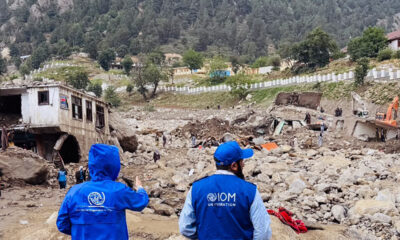
Widespread reaction to Nuristan floods; from messages of sympathy to requests for urgent assistance
-

 Latest News5 days ago
Deadly Nuristan floods death toll climbs to 23 and nearly 100 missing
-

 Regional5 days ago
Hamas names Khalil Al-Hayya as new overall leader