
Latest News
UN warns of mounting pressures facing Afghans despite relative stability
Gagnon said many returnees are arriving with limited resources and face difficulties reintegrating into communities already struggling with economic hardship.

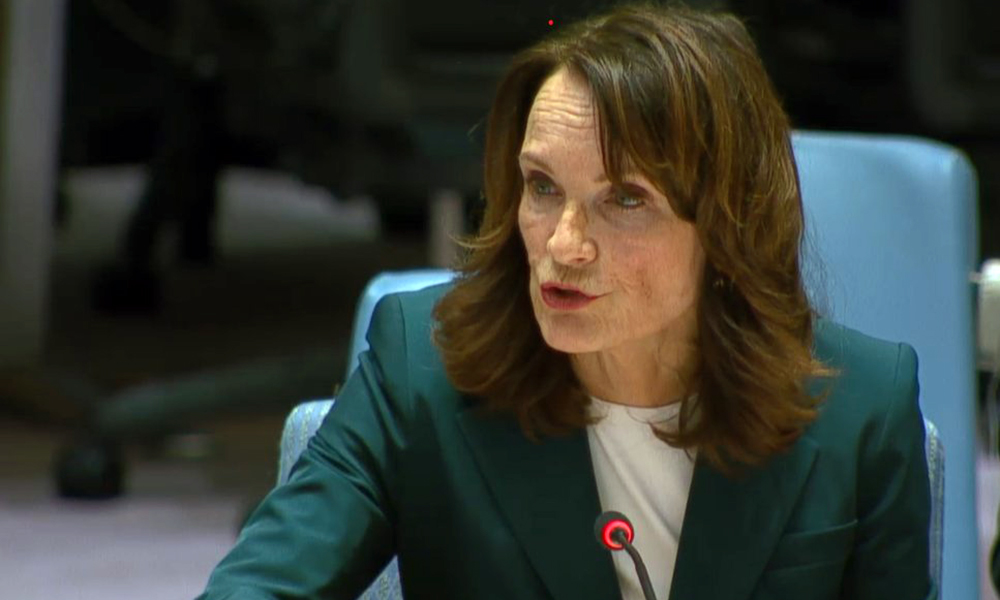
A senior United Nations official warned the Security Council on Monday that Afghans are facing growing economic, humanitarian and human rights challenges despite relative stability under the Islamic Emirate.
Addressing the Council, Georgette Gagnon, the UN Secretary-General’s Deputy Special Representative for Afghanistan, said the country remained free from any significant armed or political challenge to the current authorities, but cautioned that long-term risks continue to accumulate.
“On the surface, Afghanistan under the de facto authorities remains stable,” Gagnon said, noting that territorial and administrative control has been consolidated and that the authorities view nationwide peace and security as a key achievement.
However, she said economic and demographic pressures are increasing, particularly as millions of Afghans return from neighboring countries.
“Macroeconomic indicators reflect elements of stabilization: economic growth has been positive in absolute terms, with some long term-investments in infrastructure, fiscal stability has been maintained, and revenue mobilization has improved, despite challenges such as sanctions, wider regional tensions, and closure of the eastern border since last October.
“Relative stability has also allowed for positive measures such as sustained near eradication of poppy cultivation,” she said.
“Key risks remain, however, that underscore the fragility of current economic stabilization efforts with serious political impacts. The most significant is demographic. Large-scale returns from neighboring countries have led to a sudden population increase,” Gagnon said.
She pointed out that nearly 5.9 million people have returned to Afghanistan since 2023, while up to 2.8 million more are expected to return this year.
Gagnon said many returnees are arriving with limited resources and face difficulties reintegrating into communities already struggling with economic hardship.
She urged countries repatriating Afghans to ensure that returns are voluntary, safe and dignified and comply with international protection obligations.
The UN official also highlighted Afghanistan’s ongoing humanitarian challenges, noting that an estimated 21.9 million people – about 45 percent of the population – will require humanitarian assistance in 2026.
Gagnon said an estimated 3.8 million girls between the ages of seven and 18 are currently out of school, including more than 2.6 million adolescent girls. She warned that continued restrictions on education and employment opportunities for women are having long-term consequences for Afghanistan’s development and economy.
She also expressed concern over broader human rights issues, citing recent reports of the detention of around 30 women in Herat for allegedly violating dress code regulations, as well as arrests of journalists and the closure of media outlets.
On regional issues, Gagnon said relations between Afghanistan and Pakistan remain strained, with crossing closures and security incidents affecting trade, humanitarian operations and civilians on both sides of the frontier. She called for dialogue and de-escalation to address disputes.
The UN official reaffirmed the importance of continued international engagement with Afghanistan, stressing that dialogue does not constitute endorsement of the current authorities but is necessary to support the Afghan people and address regional and international concerns.
Gagnon urged participants in the Doha Process to maintain efforts aimed at supporting Afghanistan’s eventual reintegration into the international community.
In conclusion she said: “UNAMA remains invested in achieving this Council’s affirmed end state for Afghanistan. Ongoing and constant dialogue is essential, together with principled and pragmatic engagement, even where progress towards the end state is incremental. With strategic patience, coherent and coordinated diplomacy, and open dialogue, progress can be made in full support of the Afghan people.”



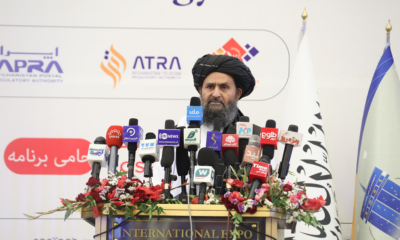


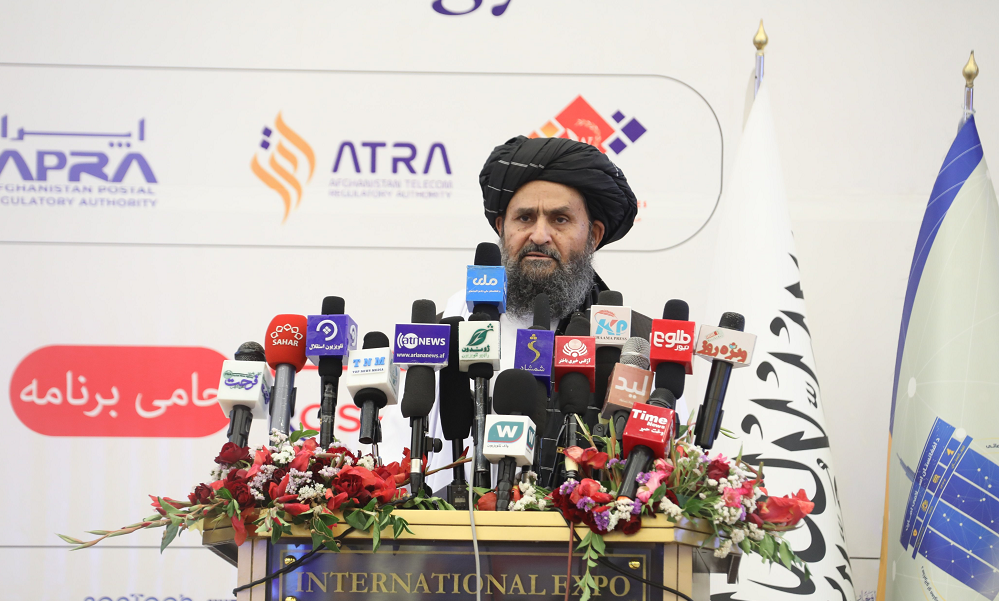
Mullah Abdul Ghani Baradar, the Deputy Prime Minister for Economic Affairs, said on Sunday Afghanistan has the potential to connect South Asia with Central Asia through data transit.
Speaking at the opening of a communications and information technology exhibition in Kabul, Baradar described the development of the communications and IT sectors as one of the Islamic Emirate’s key priorities.
“Advancing the communications and technology sector in line with the demands of the modern era is our responsibility,” Baradar said. “The Islamic Emirate of Afghanistan seeks to gradually use existing resources to become competitive with countries in the region and around the world.”
Baradar added that since the Islamic Emirate returned to power, Afghanistan has made progress in communications and information technology, while also achieving gains in digital governance.
Meanwhile, Deputy Prime Minister for Administrative Affairs Abdul Salam Hanafi stressed the importance of expanding digital governance, saying: “All government institutions should deliver their services through digital systems and connect with other government agencies to provide greater convenience for our fellow citizens.”
Minister of Industry and Commerce Nooruddin Azizi also announced plans to simplify and digitize export procedures.
“Simplifying and digitizing government is one of our aspirations. We have an export program and a system integration project underway, which will be launched soon,” he said.
Minister of Communications and Information Technology Abdul Ahad Fazli said that telecommunications services would be expanded across the country.
“The Ministry of Communications and Information Technology is at your service, especially in provinces and remote areas that have been deprived of telecommunications services,” Fazli said.
Telecommunications companies also reaffirmed their commitment to expanding telecom and internet services across Afghanistan. Company officials said they would continue working alongside the government to further develop the technology sector.
Aliullah Sarwari, CEO of Afghan Wireless Communication Company (AWCC), said: “We are committed to investing in the telecommunications sector and improving service quality. Most remote areas are now covered by telecommunications services. God willing, we will also cooperate with the authorities to further enhance service quality.”
The Communications and Information Technology Exhibition was held in Kabul with the participation of government officials and companies operating in the technology sector. At the conclusion of the exhibition, the Ministry of Communications and Information Technology signed several memorandums of understanding with government agencies to expand digital services and facilitate the delivery of public services.


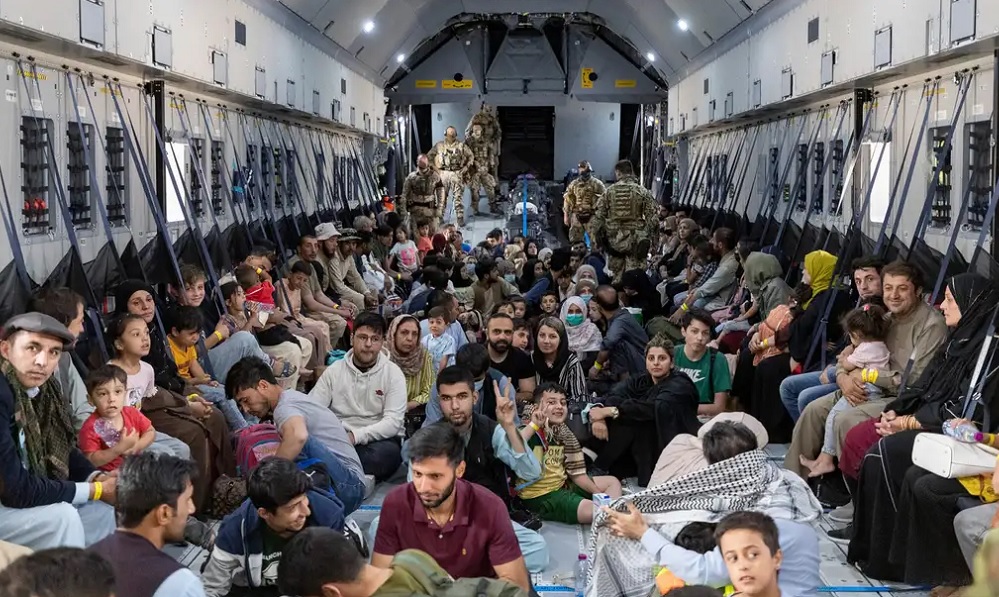
Five German soldiers investigated over alleged theft during Kabul evacuation mission

Myanmar military escalates civilian killings, monitor warns, amid diplomatic push

Uzbekistan issues 5,000 visas to Afghan citizens this year

Tahawol: Trump halting major Iran escalation

Saar: Afghanistan-Uzbekistan economic ties

India offers 1,000 online scholarships for Afghan students for 2026-27 academic year

Afghanistan eyes direct Basmati rice imports from India amid tensions with Pakistan

Cricket world pays tribute to Afghanistan fast bowler Shapoor Zadran

Turkey spent over $120 million to prepare airport for Qatar-donated U.S. presidential aircraft

Afghanistan, Uzbekistan set for friendly cricket clash in Khost
Tahawol: Trump halting major Iran escalation
Saar: Afghanistan-Uzbekistan economic ties

Tahawol: New developments ahead in the Middle East discussed

Saar: Rising tensions between Kabul and Islamabad discussed

Tawsia: Factors behind rising fuel prices in Afghanistan discussed
-

 Latest News5 days ago
Germany defends Afghan deportation policy after fatal Trier knife attack
-

 Sport5 days ago
FIFA updates world rankings; Spain climbs to No. 1, Afghanistan ranked 171st
-
 Latest News5 days ago
Afghanistan and Uzbekistan advance railway cooperation, discuss Trans-Afghan project
-
 Latest News5 days ago
Amnesty International calls for probe into Pakistan airstrike on Kabul rehabilitation centre
-
 Business4 days ago
Pakistan’s trade deficit with neighbours surges to nearly $16 billion as exports to Afghanistan plunge
-

 Sport5 days ago
Rahmat Shah Zurmati appointed Afghanistan’s new Test and ODI captain
-
 Latest News3 days ago
Five armed men killed while attempting to cross Durand Line into Badakhshan
-
 Latest News5 days ago
More than 40 killed in deadly Nuristan floods, says UN